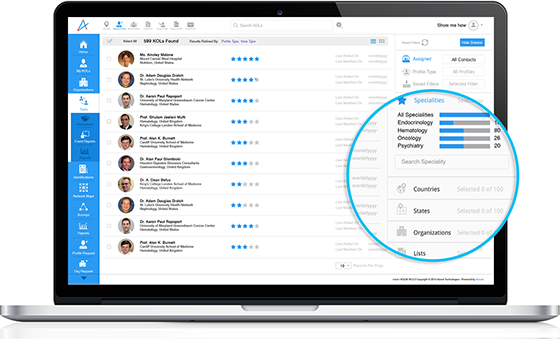

Medical Affairs is one of the most HCP-centric functions within life sciences. Every part of the process, from identifying the right experts to driving engagement and measuring its impact depends on how well a team understands and manages its relationships with healthcare professionals. When relationship data is spread across spreadsheets, inboxes, and disconnected systems, even experienced MSL and Medical Affairs teams struggle to see the full picture. ... Read this blog
Medical affairs has become a more accountable and visible function within the broader organization. Hence, the role of Medical Science Liaisons has also evolved considerably. The growing complexity of therapeutic areas means a single trial readout or data release can reshape an entire engagement strategy overnight. So there’s a little room for generic targeted outreach. Yet most teams are still operating with processes built for an earlier version of the role that was focused more on relationship management and less on strategic accountability. ... Read this blog
A medical congress serves as one of the most valuable intelligence avenues of the year that life sciences teams look forward to. Three days of presentations, panels, late-breaking trials, and corridor conversations can shift the scientific narrative in a therapeutic area for the next few years. ... Read this blog

Medical affairs teams are overwhelmed by data. Interaction logs, congress attendance records, medical insights. In short, the raw material of HCP intelligence is everywhere. Yet when a Medical Science Liaison needs a complete picture of a Key Opinion Leader before a critical meeting, they're left stitching together fragments from different systems. ... Read this blog
Product launches unfold under immense pressure. Timelines are accelerated, expectations are high, and early perceptions can shape a product’s trajectory for years to come. In this context, teams cannot afford to rely on broad KOL (Key Opinion Leader) lists. ... Read this blog

The growing inclusion of patient-centric practices has fundamentally reshaped how life sciences organizations define the value of insights. When acted on effectively, medical insights can shape priorities, inform evidence generation, refine protocols, and ultimately ensure that patient needs are reflected in clinical and real-world outcomes. ... Read this blog
With the rise of new therapies, evolving treatment guidelines, and a growing number of healthcare professionals, ensuring that Medical Science Liaison (MSL) efforts are strategically focused is more important than ever. ... Read this blog

It is often emphasized that success as an MSL is built on agility, adapting swiftly to new research, responding to stakeholder needs, and thriving in a landscape of continual change. Yet with every advancement, MSLs face rising demands: packed travel schedules, rapidly evolving therapy areas, and an expectation to deliver scientific value at lightning speed. ... Read this blog
Launching a new cardiology product is no small feat. It’s a journey that demands precision, collaboration, and a deep understanding of the science behind them and the market. ... Read this blog

In the world of pharma, medical affairs is like the bridge between the lab and the lives those medicines aim to improve. It's the team that translates complex science into clear, usable information for doctors, patients, and even policymakers. ... Read this blog

Medical Conferences are important platforms for Medical Affairs and cross-functional teams to engage with healthcare professionals (HCPs), key opinion leaders (KOLs), and stakeholders. But the value of these events does not end when the last session concludes. The true power lies in what you do after the event and that’s where post-conference analytics become a game-changer. ... Read this blog
Medical Affairs strategy has always been relationship-driven. But in the wake of digital transformation in healthcare communication, face-to-face touchpoints are now just one part of the bigger picture. KOLs (Key Opinion Leaders) and DOLs (Digital Opinion Leaders) in healthcare now expect fast, personalized, and informed interactions that go beyond traditional ways of engagement. ... Read this blog
Recommended