07-02-2025
What Makes an Effective KOL Profile? Key Elements for Medical Affairs Teams
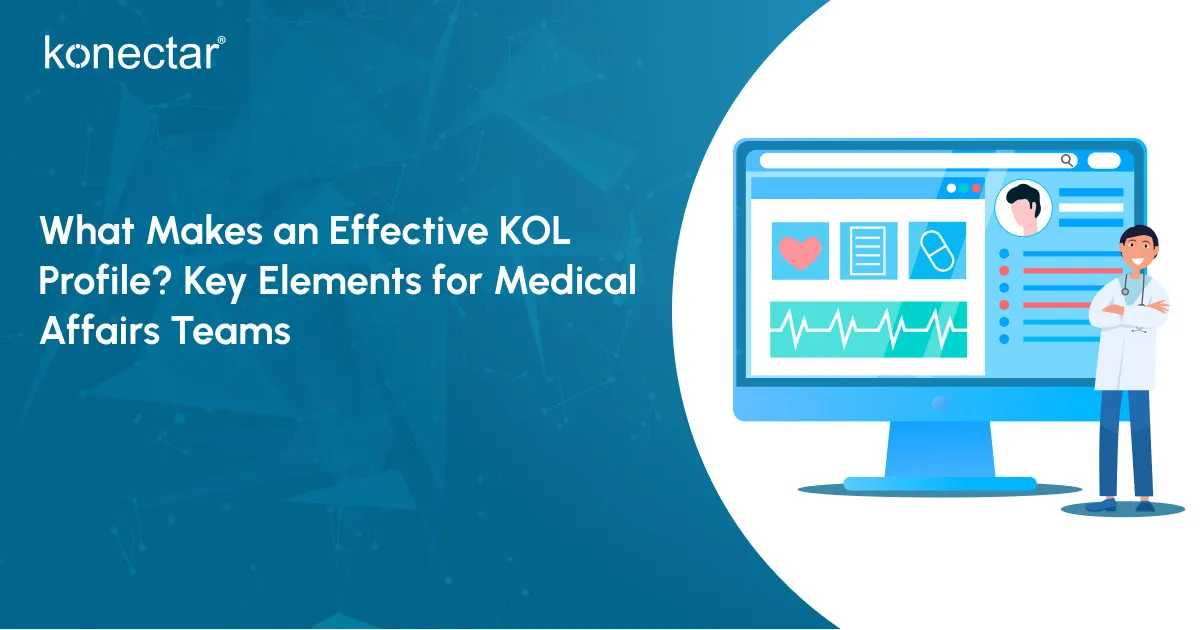
A KOL profile is more than a professional summary, it’s a strategic tool that enables medical affairs teams to understand, engage, and collaborate with key opinion leaders in meaningful ways. By combining data from research, clinical practice, and digital activity, a strong KOL profile empowers teams to make informed decisions, tailor engagement strategies, and build partnerships that drive medical innovation.
In this article:
How Effective KOL Profiles Enhance Medical Affairs Strategy & Engagement
A well-structured KOL profile is the foundation for successful engagement strategies in medical affairs, life sciences, and pharma. By compiling and analyzing key data points, teams can move beyond traditional KOL selection methods and embrace precision-driven engagement that enhances collaboration efficiency and scientific impact.
A comprehensive KOL profile allows medical affairs teams to:
1. Identify the Right Experts: KOL profiling ensures data-backed selection based on publications, clinical trials, conference activity, and influence in specific therapeutic areas.
2. Optimize Resource Allocation: Rather than engaging a broad network of experts, teams can prioritize high-impact KOLs, ensuring efficient use of budgets, personnel, and engagement efforts.
3. Enhance Compliance & Transparency: A robust KOL profile helps track collaborations, advisory roles, and financial disclosures, ensuring alignment with global compliance regulations.
By leveraging detailed, real-time KOL profiling, medical affairs teams reduce guesswork and build meaningful, long-term partnerships with experts who align with their scientific and commercial objectives.
Key Elements of an Effective KOL Profile
The following key elements form the foundation of a robust KOL profile, enabling data-driven decision-making and effective stakeholder engagement:
Demographic & Professional Information
An effective KOL profile begins with a comprehensive overview of their demographic and professional background. This includes personal details such as name, age, gender, and geographic location, providing essential context for their influence within specific regions or medical communities.
Their current role and affiliations, whether with hospitals or universities, offer insight into their active involvement in the industry. A strong profile also highlights their professional credentials, establishing their credibility and expertise.
Academic & Research Contributions
A KOL’s academic and research contributions are crucial indicators of their expertise and impact within their field. Their publications and citations, including peer-reviewed journal articles and research papers, reflect their scholarly influence and the reach of their work.
Participation in conferences, whether as a speaker or panelist, showcases their role in disseminating knowledge and shaping industry discussions. Additionally, their ability to secure research grants and funding highlights the credibility of their work and the trust placed in them.
Some KOLs contribute to innovation through patents and technological advancements. Their involvement in clinical trials, whether as a principal investigator or a contributing researcher, further demonstrates their hands-on role in advancing medical science.
Influence & Digital Presence
A KOL’s influence and digital presence are crucial in determining their reach and engagement within the industry. Their social media activity on social media platforms and research forums reflects their ability to connect with peers and share insights from ongoing medical discussions.
Their presence in media mentions and interviews highlights their recognition as a trusted expert. Beyond content creation, their engagement metrics, such as follower count and audience interactions, offer valuable insights into their thought leadership and impact within the medical community.
How Technology Enhances the Process
Technology enhances KOL profiling by making it more efficient, precise, and actionable. Advanced tools and digital solutions help organizations identify, segment, and engage with KOLs more effectively.
AI-Driven Analytics for Improved KOL Identification and Segmentation
Artificial intelligence (AI) and machine learning (ML) have revolutionized KOL identification and segmentation. These techniques analyze vast datasets quickly and accurately. AI-driven tools assess publication history, conference participation, and clinical trials to identify KOLs most relevant to specific therapeutic areas.
Integrating KOL Data with CRM Systems and Virtual Engagement Platforms
Seamless integration of KOL data with Customer Relationship Management (CRM) systems enhances tracking and recording transactions, and engagement strategies.
A well-integrated system enables teams to manage KOL interactions, schedule meetings, track communications, and personalize engagement based on historical data.
These integrations help streamline workflows, foster long-term relationships, and ensure that KOL engagement aligns with broader business objectives.
konectar delivers next-generation KOL profiling solutions with AI-powered analytics that allow real-time tracking and enable life sciences teams to identify, engage, and manage KOL relationships effectively.
Schedule a demo today and discover how konectar can transform KOL management initiatives.
The Takeaway
Maintaining an effective KOL profile goes beyond data management. It’s about continuously refining insights, understanding evolving expertise, and using that knowledge to drive meaningful engagement. By taking a proactive, insight-driven approach, organizations can foster stronger relationships with KOLs.
FAQs
- What data points should be included in an effective KOL profile?
A comprehensive KOL profile should include the demographic and professional information of key thought leaders, their academic and research contributions, and digital presence.
-
How does technology enhance KOL profiling?
Technology transforms the KOL profiling process by automating data collection, analyzing vast scientific and digital sources, and delivering real-time insights. This helps medical affairs teams identify the right experts faster, personalize engagement, and make data-driven decisions.


Recommended