31-08-2023
Effective HCP Engagement Strategies for Pharma Companies
Healthcare professionals are among the most time-pressured audiences in any industry. For Medical Affairs teams, earning and maintaining their engagement isn't just a commercial imperative, it's the foundation of every successful collaboration that ultimately improves patient outcomes. This article outlines the strategies, tools, and technologies that leading pharma organizations are using to engage HCPs with precision, credibility, and long-term impact.
In This Article
- How to optimize HCP engagement from first contact to long-term partnership
- Identifying and prioritizing the right HCPs for your objectives
- The Challenge
- How konectar is transforming HCP engagement
- FAQs
How to optimize HCP engagement from first contact to long-term partnership
Building a productive HCP relationship requires more than periodic touchpoints. It demands a structured, value-driven approach that respects the HCP's time, addresses their professional priorities, and demonstrates a genuine commitment to improving care.
1. Establish a Clear Value Proposition from Day One
The first interaction sets the tone for everything that follows. Medical Affairs teams must articulate with clarity and specificity such as what the partnership offers the HCP professionally and what it means for their patients.
This means moving beyond product promotion. HCPs respond to:
- Clinical evidence that supports decision-making in their therapeutic area
- Opportunities to contribute to research, advisory boards, or educational initiatives
- Access to real-world data and peer insights relevant to their practice
When expectations are clearly defined early, both parties can align on shared goals. This reduces friction and accelerates the relationship.
2. Deliver Continuous Value Through High-Quality Content
HCPs are information-intensive professionals. They are constantly seeking evidence-based guidance to improve treatment decisions, stay current with therapeutic advances, and refine their clinical practice.
A dedicated resources portal curated for relevance and updated regularly signals that your organization is a credible, long-term partner rather than a transactional vendor. Effective content assets include:
- Peer-reviewed clinical studies and white papers
- Disease area infographics and treatment pathway summaries
- Instructional videos on product use or procedural techniques
- Regulatory updates and industry news specific to their specialty
The quality, relevance, and timeliness of content directly influence whether an HCP continues to engage with your organization or turns elsewhere.
3. Prioritize Digital Engagement Channels
The shift to digital engagement isn't a temporary adjustment, it's a permanent transformation of how HCPs prefer to interact with pharma partners. A majority of physicians post-pandemic prefer virtual communication modes, including email, webinars, social media, and virtual meetings over in-person interactions.
For Medical Affairs teams, this creates both an opportunity and an obligation: invest in the infrastructure and content needed to engage HCPs effectively through digital channels.
High-impact digital engagement formats include:
- Virtual advisory boards and expert panels
- Condition-specific webinars featuring clinical data presentations
- Interactive online forums for peer-to-peer exchange
- On-demand content libraries accessible at the HCP's convenience
4. Leverage Medical Conferences Strategically
Therapy-specific and cross-specialty conferences remain valuable venues for establishing credibility and initiating relationships with HCPs who may be harder to reach through digital channels alone.
Medical Affairs teams can maximize conference impact by:
- Presenting robust clinical data in sessions or poster formats
- Facilitating satellite symposia or sponsored workshops
- Using pre-conference intelligence to identify and prioritize target HCPs
- Following up digitally within 48 hours using personalized, content-relevant messaging
5. Build HCP Advocacy Through Speaker Development
A well-structured speaker training program transforms engaged HCPs into credible, authentic advocates. When healthcare professionals speak on behalf of your therapeutic area at medical society events or peer forums, the message carries a weight that internal communications simply cannot replicate.
Effective speaker programs offer HCPs genuine professional development not just talking points. Training should cover scientific communication, audience engagement, and navigating compliance boundaries with confidence.
Identifying and prioritizing the right HCPs for your objectives
Even the most sophisticated engagement strategy fails if it's directed at the wrong audience. Identifying HCPs who genuinely align with your therapeutic focus, scientific priorities, and collaborative goals is the prerequisite for everything else.
Traditional identification criteria such as prescription volume, institutional affiliation, publication record remain relevant but incomplete. Medical Affairs teams should also evaluate:
- Therapeutic focus and subspecialty depth
- Clinical trial participation and research affiliations
- Speaking engagements and educational activity
- Network influence and peer relationships within the specialty
- Digital presence and social media engagement in the therapeutic area
- Alignment with organizational values and patient-centered priorities
The Challenge
The global healthcare landscape encompasses millions of professionals across thousands of specialties and institutions. Manual identification is not scalable it introduces bias and inconsistency into what should be a data-driven process.
This is where AI-powered platforms fundamentally change the equation. Rather than spending weeks building target lists from fragmented data sources, Medical Affairs teams can generate comprehensive, ranked HCP profiles in seconds with the depth and accuracy needed to make confident decisions.
How konectar is transforming HCP engagement
Pharma organizations face a compounding challenge: HCPs are increasingly selective about the partnerships they commit to, the organizations they trust, and the time they invest. At the same time, the complexity of identifying, engaging, and sustaining relationships with the right professionals has grown substantially.
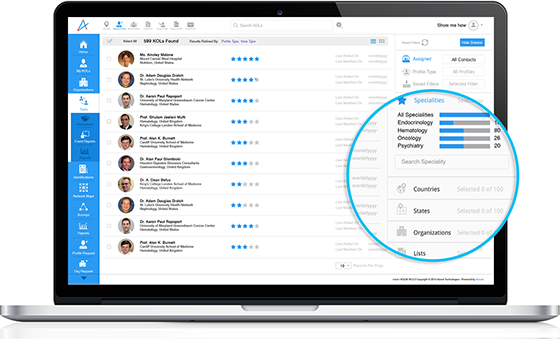
konectar is an AI-powered healthcare analytics and engagement platform purpose-built to address this challenge, giving Medical Affairs teams the intelligence, tools, and workflows they need to operate with precision and impact.
At the core of konectar is its ability to rapidly identify and rank healthcare professionals based on criteria that matter to your specific objectives. Using advanced algorithms applied to comprehensive datasets, konectar identifies:
- Thought leaders and key opinion leaders by therapeutic area and geography
- Emerging scientific voices with growing influence in target specialties
- HCPs with relevant clinical trial participation and publication history
- Professionals whose network relationships amplify outreach impact
What previously required weeks of manual research across disparate sources now takes seconds with greater accuracy and consistency. konectar's real-time dashboards give Medical Affairs teams visibility into what's working and what isn't across every engagement initiative.
Teams can track engagement depth, response rates, and relationship progression over time. This continuous feedback loop enables ongoing optimization, ensuring that strategies evolve alongside the relationships they're designed to support. To see konectar in action, request a demo with our team today.
FAQs
- How has digital adoption changed HCP engagement for Medical Affairs teams?
The shift to digital engagement accelerated significantly post COVID-19 pandemic has become permanent. The majority of physicians now prefer virtual communication for interactions with pharma partners. For Medical Affairs teams, this means investing in digital infrastructure that can deliver scientific content, facilitate expert dialogue, and manage relationships at scale.
- What role does AI play in modern HCP identification?
AI platforms like konectar eliminate the manual effort and inconsistency inherent in traditional HCP identification. By analyzing vast datasets, it provides a complete and accurate picture of each HCP's profile, enabling faster, better-informed prioritization decisions.
- How do strong HCP engagement strategies contribute to business outcomes?
Targeted, value-driven HCP engagement builds the trust and scientific credibility that underpin successful long-term partnerships. These relationships support clinical development, medical education, and market access objectives and ultimately contribute to patient outcomes that reflect well on both the HCP and the pharma partner.


Recommended