12-02-2025
Achieving MSL & Medical Affairs Goals through Impactful KOL Collaborations

Effective KOL collaboration plays an important role in advancing therapeutic outcomes. However, identifying KOLs whose expertise, influence, and scientific interests align with specific Medical Affairs objectives remains a challenge. As the HCP landscape evolves, teams need effective approaches to identify, evaluate, and prioritize the experts most relevant to their engagement goals.
This article explores how Medical Affairs teams can advance their medical goals through more effective engagement programs.
KOL Engagement Strategies for Medical Affairs
Identifying KOLs effectively requires a strategy aligned with specific engagement objectives. Not all KOLs serve the same purpose; their influence, expertise, and network must match the intended goal.
Define Medical Affairs Engagement Objectives
Before identifying KOLs, clearly outline the goal of the engagement:
- Clinical Insight Gathering: For research or clinical trial design.
- Educational Outreach: For awareness campaigns, workshops, or symposiums.
- Therapy Adoption & Market Insights: For understanding treatment trends and influencing practice.
- Patient Advocacy & Support: For connecting with community or patient-centered initiatives.
Map KOL Influence to Goals
Once objectives are set, evaluate potential KOLs based on their ability to drive impact in that area:
- Scientific Credibility: Publications, research involvement, and clinical trial participation.
- Professional Reach: Speaking engagements, society memberships, and guideline committee roles.
- Peer Recognition: Referrals, recommendations, and leadership within the therapeutic community.
- Digital Presence: Engagement on professional networks, medical forums, and social media platforms.
KOL Segmentation and Prioritization
Once potential KOLs have been evaluated, segment them based on their scientific expertise, influence, relevance to the therapeutic area, and alignment with Medical Affairs objectives. For example:
- High Priority: KOLs with strong scientific expertise and a close alignment with the team's medical objectives. They may be prioritized for frequent, relevant scientific exchanges.
- Medium Priority: KOLs with relevant expertise and potential to contribute to specific medical objectives. Engagement can focus on their areas of specialization and evolving research interests.
- Emerging or Specialized Experts: KOLs who may have a narrower geographic reach or specialized expertise but offer valuable perspectives on emerging research, clinical practice, or unmet medical needs.
KOL segmentation should be based on transparent, objective criteria rather than reputation alone. Also this list should also be reviewed periodically as research contributions, therapeutic interests, and medical priorities evolve. This helps MSLs plan engagement more effectively while ensuring that relevant scientific perspectives are not overlooked.
Common Mistakes to Avoid in KOL Collaboration
Even with a well-defined KOL engagement strategy, gaps in information management and follow-up can limit the value of scientific collaboration. Medical Affairs teams should watch out for these common pitfalls:
Relying on a single data source
Evaluating KOLs using information from only one source may not give you a full picture of their expertise and professional activities. Reviewing information across relevant sources such as clinical trial registry, medical conference participation as a speaker or a moderator, etc. provides a more complete picture of an expert's work.
Overlooking changes in scientific activity
A KOL's professional profile can reveal developments that may be relevant to ongoing engagement. Periodically reviewing these signals helps teams keep their understanding of experts current.
Failing to maintain interaction history
When previous discussions and follow-up actions are not documented consistently, MSLs may lack the context needed to prepare for subsequent interactions or maintain continuity across the team.
Treating KOL profiles as static records
A profile that was accurate a year ago may no longer reflect an expert's current affiliations, research focus, or areas of interest. Keeping profiles updated helps teams make decisions using relevant information.
Overlooking insights from previous interactions
Scientific questions, medical insights, and unmet medical needs raised during earlier discussions can inform future engagement. If these insights are not captured and revisited, valuable context may be lost.
How AI-Powered konectar Simplifies KOL Identification and Engagement
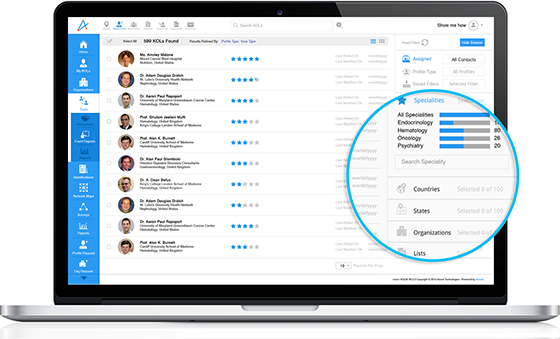
konectar is an AI-powered, KOL management platform that brings KOL identification, profiling, segmentation, and engagement management together in one place. It enables life sciences teams to manage the entire KOL management workflow without relying on multiple disconnected systems.
Key capabilities include:
- Identify KOLs: Access lists of healthcare professionals (HCPs) and apply relevant filters to find experts aligned with specific medical objectives.
- Access Detailed KOL Profiles: Gain 360-degree of experts’ professional activities to understand each KOL’s expertise and research interests.
- Segment and Prioritize KOLs: Organize identified experts into relevant segments based on their expertise, engagement needs, and organizational priorities.
- Manage Engagement Through Integrated CRM: Use konectar CRM to create engagement plans, maintain interaction histories, document discussions, and track follow-up activities.
- Maintain Continuity Across the KOL Lifecycle: Move from identifying and profiling experts to planning and managing ongoing engagements within the same platform, without transferring information between separate systems.
With konectar, Medical Affairs and MSL teams can manage the entire KOL lifecycle, from identification and profiling to segmentation and engagement planning, in one AI-powered platform. Request a demo of konectar to see how it can help your team build more meaningful, objective-driven KOL relationships.


Recommended